

Chinese and Russian Students Embrace Traditional Chinese Culture
To promote China’s outstanding traditional culture, pass on the charm of intangible cultural heritage related to the Dragon Boat Festival customs, build a bridge for cultural exchange and friendly mutual learning among Chinese and Russian youth, and enhance friendship and cultural identity among students from both countries, Shandong Vocational College of Light Industry invited more than ten representatives of Russian international students from Shandong University of Technology on the afternoon of May 26, 2026 to jointly organize the "Chinese and Russian Students Embrace Chinese Culture" Dragon Boat Festival intangible cultural heritage experience event. Russian foreign teachers and Russian international students, together with Chinese students, enjoyed an immersive experience of the appeal of the traditional festival and intangible cultural heritage.
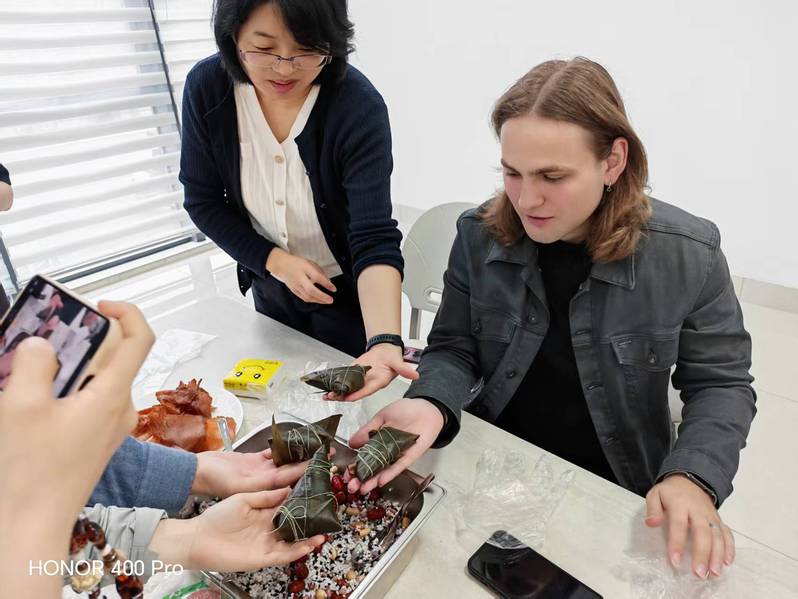
At the start of the activity, a professional lecturer gave a vivid and accessible introduction to the historical origin, folk connotations and traditional food culture of the Dragon Boat Festival. The lecturer demonstrated in detail the standard procedures for making zongzi, including folding bamboo leaves, filling glutinous rice, adding fillings and tying with cotton threads. Divided into free groups, Chinese and Russian students collaborated with one another to take part in the fun zongzi‑making session. The venue was filled with warmth, harmony and constant laughter. Participants helped and cooperated with each other. Bamboo leaves were folded and twisted in their hands, and zongzi of various shapes gradually took form.
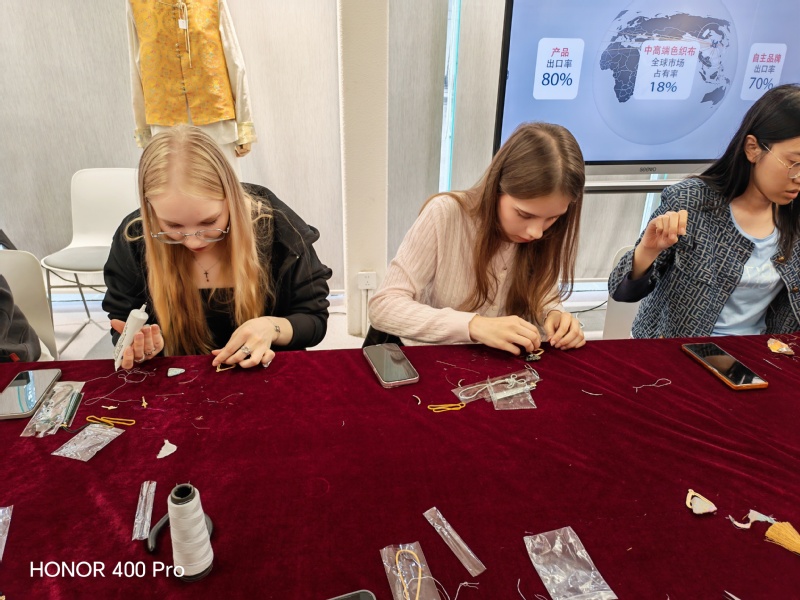
Later, teachers and students moved on to experience hand‑crafting intangible‑cultural‑heritage ornaments. An instructor of intangible heritage craftsmanship elaborated on the historical background, cultural implications and key hand‑making techniques of Song brocade pendants, offering step‑by‑step demonstrations ranging from material selection and matching, splicing and weaving to detail polishing. As a treasure of traditional Chinese intangible cultural heritage, Song brocade features exquisite patterns and auspicious meanings, which greatly captivated the international students present. They listened attentively and observed the demonstrations closely. They cut, spliced and decorated materials, polishing every detail with dedication. They immersed themselves in the ingenuity behind traditional intangible heritage handicrafts and experienced the profoundness of Chinese intangible cultural heritage through hands‑on creation.
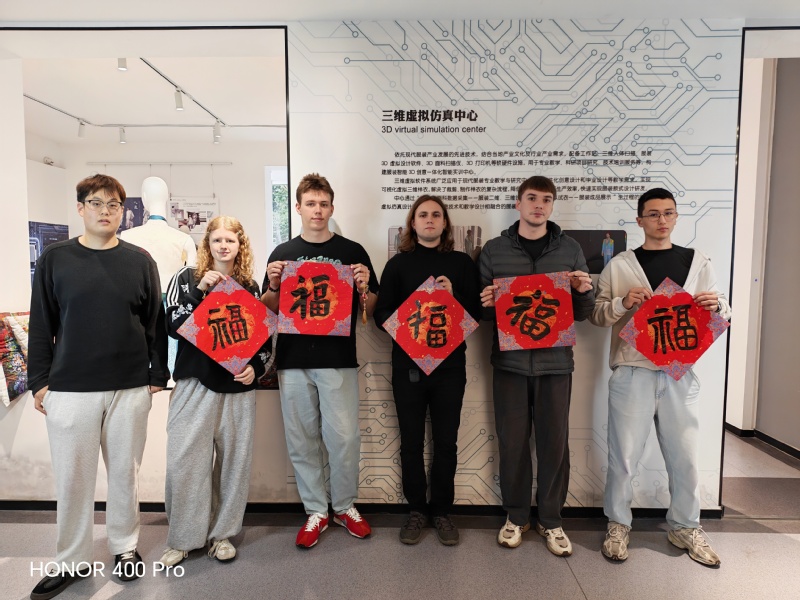
Upon the completion of hand‑craft experiences, Chinese students acted as “junior cultural tutors” and patiently taught international students how to hold writing brushes and write Chinese characters. Everyone concentrated and composed themselves to write the auspicious Chinese character Fu (blessing). Every stroke embodied cultural inheritance, and every character radiated traditional Chinese aesthetics. Immersed in the fragrance of ink, international students appreciated the beauty of Chinese characters and the charm of traditional culture, and gained genuine insight into the unique appeal of Chinese folk customs.
Centered on the traditional festival and taking intangible cultural heritage as its carrier, this Dragon Boat Festival intangible cultural heritage experience event integrated appreciation, fun and practice. Through immersive activities such as zongzi‑making, crafting intangible‑heritage pendants and writing the character Fu, international students got close to, perceived and grew fond of fine traditional Chinese culture. The experience effectively bridged cultural gaps and brought participants closer to one another.
Colleges and universities in Zibo will continue to leverage traditional festivals and intangible cultural heritage resources to carry out regular Chinese‑foreign cultural exchange events. More platforms will be created for students at home and abroad to interact and learn from each other. These efforts will boost the international dissemination of fine traditional Chinese culture, deepen friendship among Chinese and Russian youth, and open a new chapter for cross‑national cultural integration.
Shandong University of Technology 266 Xincun West Road,Zhangdian District, Zibo City, Shandong Province, P.R.China
E-mail:enroll@sdut.edu.cn
Tel:(86)0533-2787522
